Choose timezone
Your profile timezone:
In 2009, experiments on colloidal tracers diffusing in complex biological fluids revealed a novel type of diffusion, distinct from both standard Brownian motion and anomalous diffusion [1]. Indeed, the mean square displacement increases linearly in time (Fickian) while surprisingly coexisting with a non-Gaussian displacement distribution. Since then, Fickian yet non-Gaussian diffusion (FnGD) has been observed in a wide range of molecular and soft matter systems, and its occurrence has generally been associated with heterogeneities in the local environment. Given that glass-forming liquids are widely regarded as the epitome of dynamic heterogeneity, a natural question arises: do they also provide a paradigmatic example of FnGD?
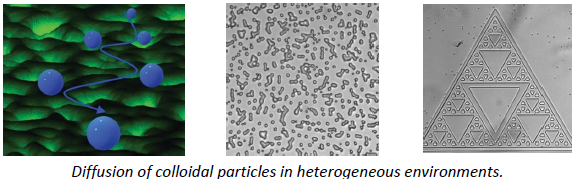
In this talk, I will illustrate how FnGD challenges the conventional understanding of microscopic diffusion, discussing key open questions, such as the search for FnGD precursors and for model systems with tunable FnGD. To this end, I will focus on our recent experiments on quasi-2D suspensions of colloidal beads subjected to a static optical force field (speckle patterns) [2]. This setup mimics the heterogeneous structure typical of soft and porous materials, while offering significantly higher control and reproducibility compared to real materials.
I will then present results on glass-forming liquids, drawing on experiments on colloidal systems and simulations of molecular liquids [3,4]. We find that FnGD becomes increasingly pronounced upon approaching the glass transition and follows universal scaling laws, providing new insight into dynamic heterogeneities and structural relaxation. Notably, this physical picture has been recently confirmed by experiments on glassy polymer nanocomposites [4]. Finally, I will broaden the discussion by presenting ongoing projects on additional systems, highlighting differences, similarities, and potential universal aspects of FnGD.
REFERENCES
1. B. Wang, S. M. Anthony, S. C. Bae and S. Granick, PNAS (2009).
2. R. Pastore, A. Ciarlo, G. Pesce, F. Greco and A. Sasso, PRL (2021) / Soft Matter (2022).
3. F. Rusciano, R. Pastore and F. Greco, PRL (2022) / IJMS (2023) 24, 7871.
4. F. Rusciano, R. Pastore, F Greco and W. Kob, arXiv:2501.09288 (2025).
5. M. Hu, H Chen, H Wang, S Burov, E Barkai, D Wang, ACS Nano (2023).
